Illinois Just Passed the Nation's Strongest AI Safety Law, California Signed an AI Workforce Executive Order & Three Bills Are Moving to Protect Workers from AI Displacement
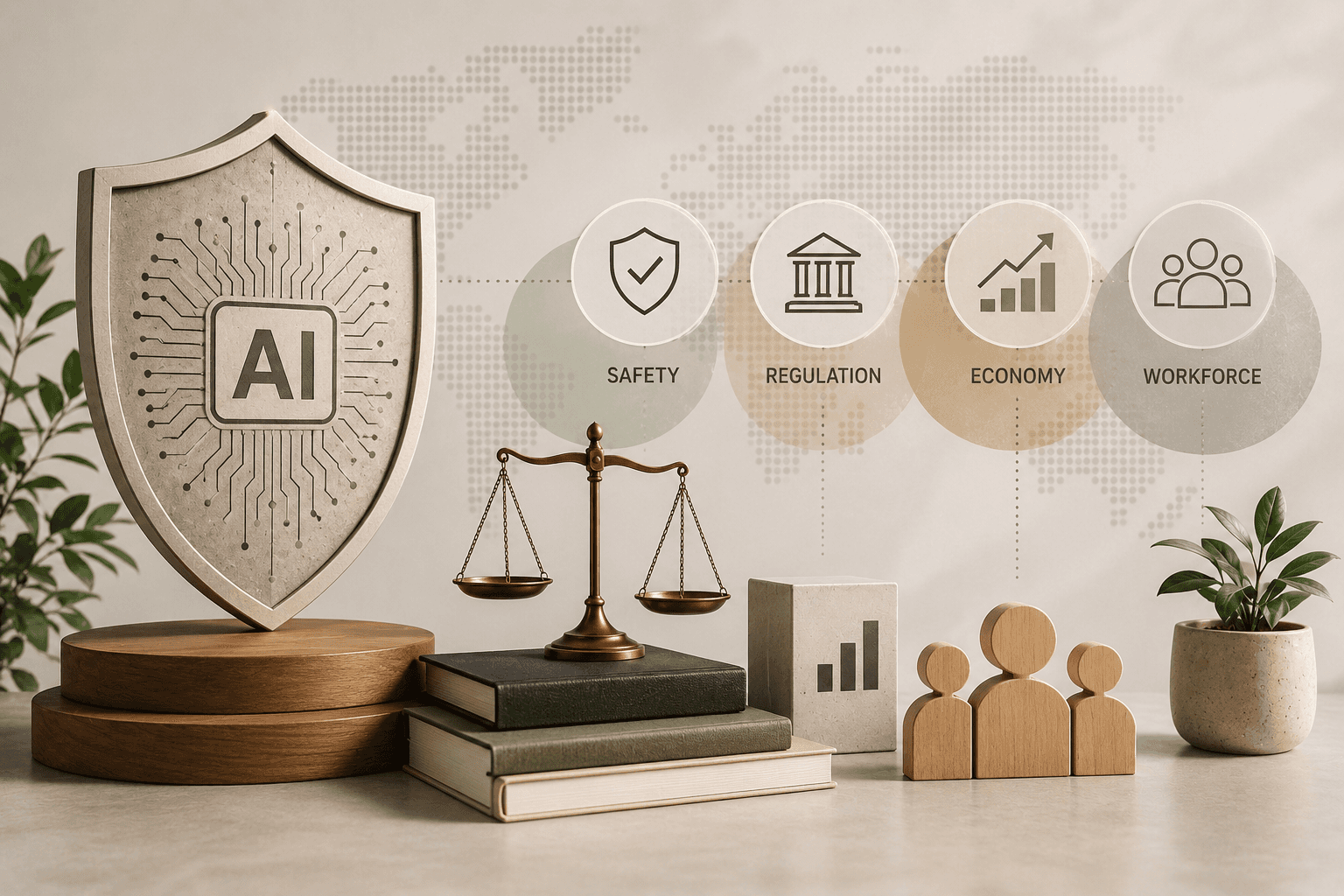
AI regulation is entering a new phase. This week, Illinois moved to impose independent safety audits on frontier AI developers, California launched a statewide response to AI-driven workforce disruption, and lawmakers across the country advanced proposals aimed at protecting workers from displacement.
For the last two years, most AI legislation has focused on transparency, bias, and disclosure. That is changing.
This month, lawmakers and regulators took significant steps toward a new phase of AI governance: addressing safety risks from frontier AI models and preparing workers for the economic disruption AI may create. Illinois advanced what could become the strongest AI safety law in the United States, California launched a first-of-its-kind workforce response initiative, and multiple legislative efforts are moving forward to address AI-driven job displacement.
For founders, employers, and AI companies, the message is becoming increasingly clear: regulators are no longer asking whether AI should be governed. They are beginning to determine how.
Illinois Moves Beyond Transparency and Into AI Safety
Illinois lawmakers recently passed SB 315, a landmark AI safety bill that would require frontier AI developers to undergo independent third-party audits of their safety practices. If signed by Governor JB Pritzker as expected, the law would become one of the most rigorous AI oversight frameworks in the country.
Unlike many existing state laws that rely primarily on company disclosures and self-reporting, Illinois would require external verification of whether AI developers are actually following their stated safety commitments. The legislation is aimed at the largest AI developers, including companies building advanced foundation models capable of widespread deployment.
For AI companies, this represents a significant shift. The conversation is moving from "tell us what safeguards you have" to "prove that those safeguards work."
The bill arrives alongside Illinois' expanding employment-related AI regulations, which now require transparency when AI is used to influence employment decisions and prohibit discriminatory outcomes generated by automated systems.
California Is Focusing on the Workforce Impact of AI
While Illinois is concentrating on AI safety, California is focusing on workers.
Governor Gavin Newsom recently signed an Executive Order directing state agencies to evaluate how AI is affecting employment, track workforce disruption, and develop recommendations for supporting workers displaced by automation. The order also requires the creation of public workforce-impact reporting tools and directs agencies to explore retraining, worker-transition programs, and other economic support mechanisms.
The initiative recognizes a reality that many businesses are already confronting: AI adoption is not simply a technology issue. It is becoming a labor and workforce issue as well.
California's action is particularly significant because the state sits at the center of the AI industry while simultaneously employing millions of workers in sectors most likely to experience AI-driven change. The executive order suggests regulators are beginning to view workforce transition planning as a core component of AI policy rather than a secondary concern.
Worker Protection Legislation Is Gaining Momentum
Several legislative efforts are also advancing at the state and federal level to address AI-related workforce disruption.
Among the emerging proposals are initiatives focused on:
Workforce retraining and upskilling programs for workers impacted by automation.
Workforce impact reporting requirements designed to measure AI-related job displacement.
Expanded oversight of AI systems used in employment decisions.
Long-term economic transition planning for industries expected to experience significant automation.
Recent federal proposals have included workforce commissions, transition-planning initiatives, and programs intended to help employees adapt to AI-driven changes in the labor market. Meanwhile, state and local governments continue introducing legislation aimed at protecting workers from opaque AI decision-making and monitoring the effects of automation on employment.
The common theme across these efforts is straightforward: lawmakers are increasingly treating AI adoption as both a technological and economic policy issue.
What Founders and Employers Should Be Watching
The regulatory landscape is evolving rapidly, but three trends are becoming clear.
1. AI Governance Is Expanding Beyond Privacy
Companies should expect regulators to focus increasingly on safety testing, risk management, and model governance rather than solely on disclosures and privacy policies. Illinois' audit-focused approach may become a model for other jurisdictions.
2. Workforce Impact Assessments Are Coming
Organizations deploying AI tools should begin evaluating how automation affects staffing, workflows, and employment practices. California's executive order signals that workforce-disruption reporting may become a larger part of future compliance obligations.
3. Employment Law and AI Are Converging
AI governance can no longer be siloed within product teams or engineering departments. Human resources, employment counsel, compliance teams, and executive leadership increasingly need to participate in AI deployment decisions. Illinois' employment regulations and broader worker-protection initiatives demonstrate how quickly these areas are converging.
The Bottom Line
The next wave of AI regulation is taking shape.
Illinois is demanding greater accountability from frontier AI developers. California is preparing for workforce disruption before it arrives. Legislators across the country are exploring ways to protect workers as AI becomes more deeply integrated into the economy.
For startups and established companies alike, the question is no longer whether AI regulation is coming. The question is whether your governance, compliance, and workforce strategies are keeping pace with it.
As regulators shift from AI innovation policies to AI accountability policies, businesses that build governance into their operations now will be better positioned to adapt as the rules continue to evolve.